

Our brand claim is that we free up your free time — because time is money.

"Our brand claim is that we free up your free time — because time is money."
That's Tomasz Suchański, CEO of Żabka, the Polish convenience store chain that IPO'd on the Warsaw Stock Exchange at a €1.5 billion valuation.
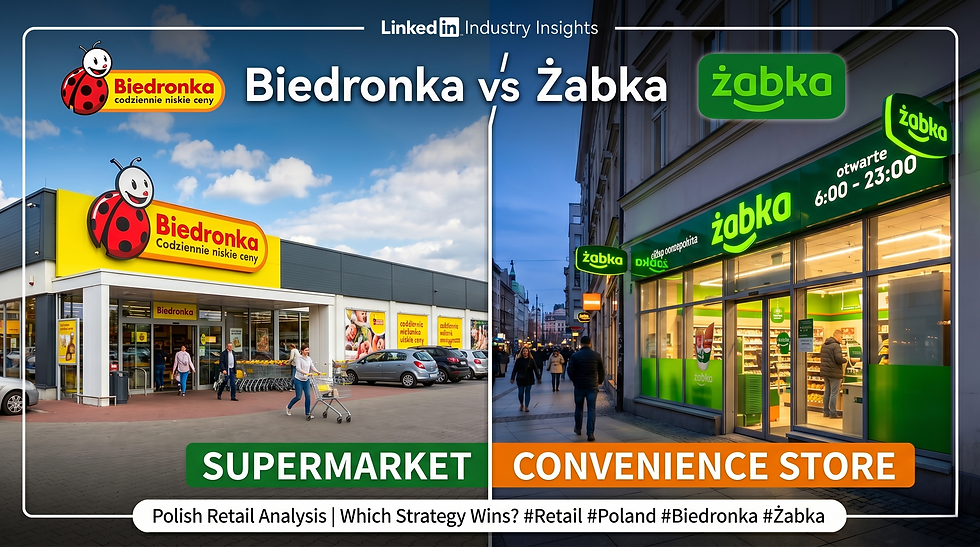
Here's what makes the quote interesting: Żabka holds about 3% of the Polish grocery market. Biedronka, the country's dominant discount retailer, holds around 30% — ten times larger, materially cheaper on almost every basket.
And yet Żabka is the one investors priced at premium multiples, and the one Gen Z shoppers walk past Biedronka to reach.
I've been thinking about this for a week. Not as a retail story — as a sourcing one.
𝟭. "𝟱% 𝗰𝗵𝗲𝗮𝗽𝗲𝗿" 𝗶𝘀𝗻'𝘁 𝘁𝗵𝗲 𝗽𝗶𝘁𝗰𝗵 𝗮𝗻𝘆𝗺𝗼𝗿𝗲.
Your Gen Z end consumer measures cost in minutes, not euros. If your sourcing brief hasn't been updated, the shelf already has.
𝟮. 𝗖𝗼𝗻𝘃𝗲𝗻𝗶𝗲𝗻𝗰𝗲 𝗶𝘀 𝗻𝗼𝘄 𝗮 𝗽𝗿𝗼𝗱𝘂𝗰𝘁 𝘀𝗽𝗲𝗰.
One-button operation. Sub-2-minute setup. Packaging is decodable in 4 seconds at the shelf. These aren't marketing angles — they're engineering requirements. Most factories still build for 2015.
𝟯. 𝗖𝗼𝗺𝗽𝗮𝗰𝘁-𝗳𝗶𝗿𝘀𝘁 𝗶𝘀 𝘁𝗵𝗲 𝗻𝗲𝘄 𝗵𝗲𝗿𝗼 𝗦𝗞𝗨.
Single-serve coffee, mini air fryers, personal blenders, countertop ice makers — engineered for c-store and instant-commerce shelves, not weekly hauls. A few Chinese factories are tooled for this. Most aren't. That gap is where the next two years live.
𝗦𝗼 𝘄𝗵𝗮𝘁'𝘀 𝘁𝗵𝗲 𝗮𝗰𝘁𝗶𝗼𝗻?
Rewrite your sourcing brief around time-cost and friction-cost, not just unit-cost. Then audit your supplier list for who has actually shipped compact-first formats — not who can quote them.
Biedronka sells groceries more cheaply. Żabka sells the absence of friction. In 2026, guess which one your end consumer is optimizing for.


Comments